
Workshop on Rethinking Legal Research in and with Africa
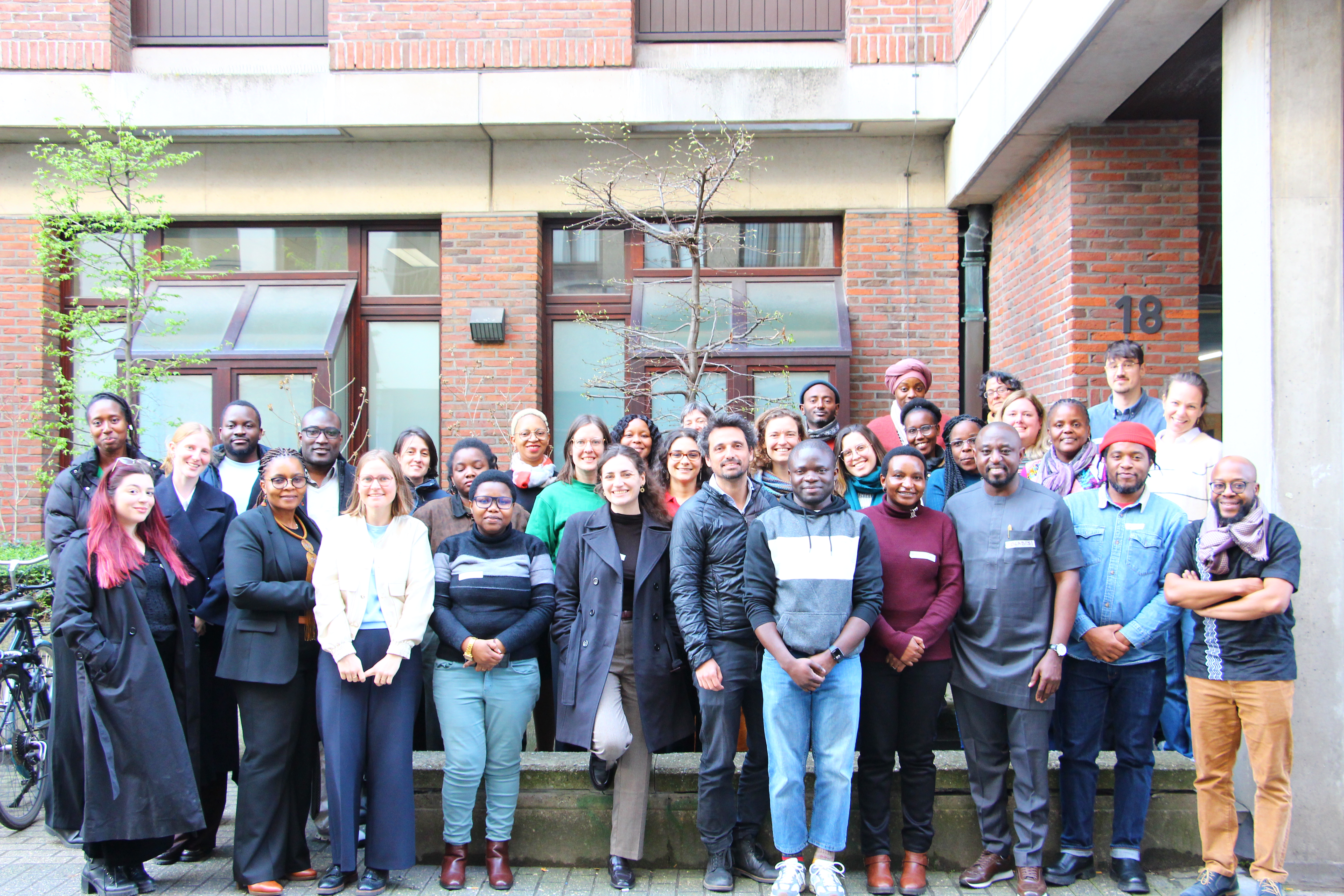
The Law and Development Research Group at Universiteit Antwerpen, in collaboration with the Chair of African Legal Studies at Universität Bayreuth, hosted the three-day international workshop Rethinking Legal Research in and with Africa: Legal Methods, Critical Perspectives, and Decolonial Approaches in the Context of Human Rights and Sustainable Development from 16 to 18 March 2026 at the Stadscampus of Universiteit Antwerpen, Belgium. The workshop was organised by Dr Isabelle Zundel (Universiteit Antwerpen) and Merlin Mitschker (Universität Bayreuth) and brought together early-career researchers together with some senior academics from across Africa and Europe working in the fields of law, human rights and sustainable development.
The workshop aimed to create a critical space for reflection on theoretical, conceptual, and methodological choices in legal research in and with African contexts. Its overarching objective was to interrogate the epistemological assumptions underpinning legal and development research and to advance decolonial, interdisciplinary, and community-responsive approaches to scholarship. Participants were invited to examine not only how research is conducted, but also whose knowledge it serves, who bears its costs, and how its outputs can be made genuinely accessible and useful to the communities it concerns. The workshop was externally supported by the Global Engagement Fund of the University of Antwerp, provided by VLIRUOS (Sharing Minds, Changing Lives) and the OJO Antwerp doctoral school, which supports early-career researchers with project funding from the Flemish Government (Flanders State of the Art).
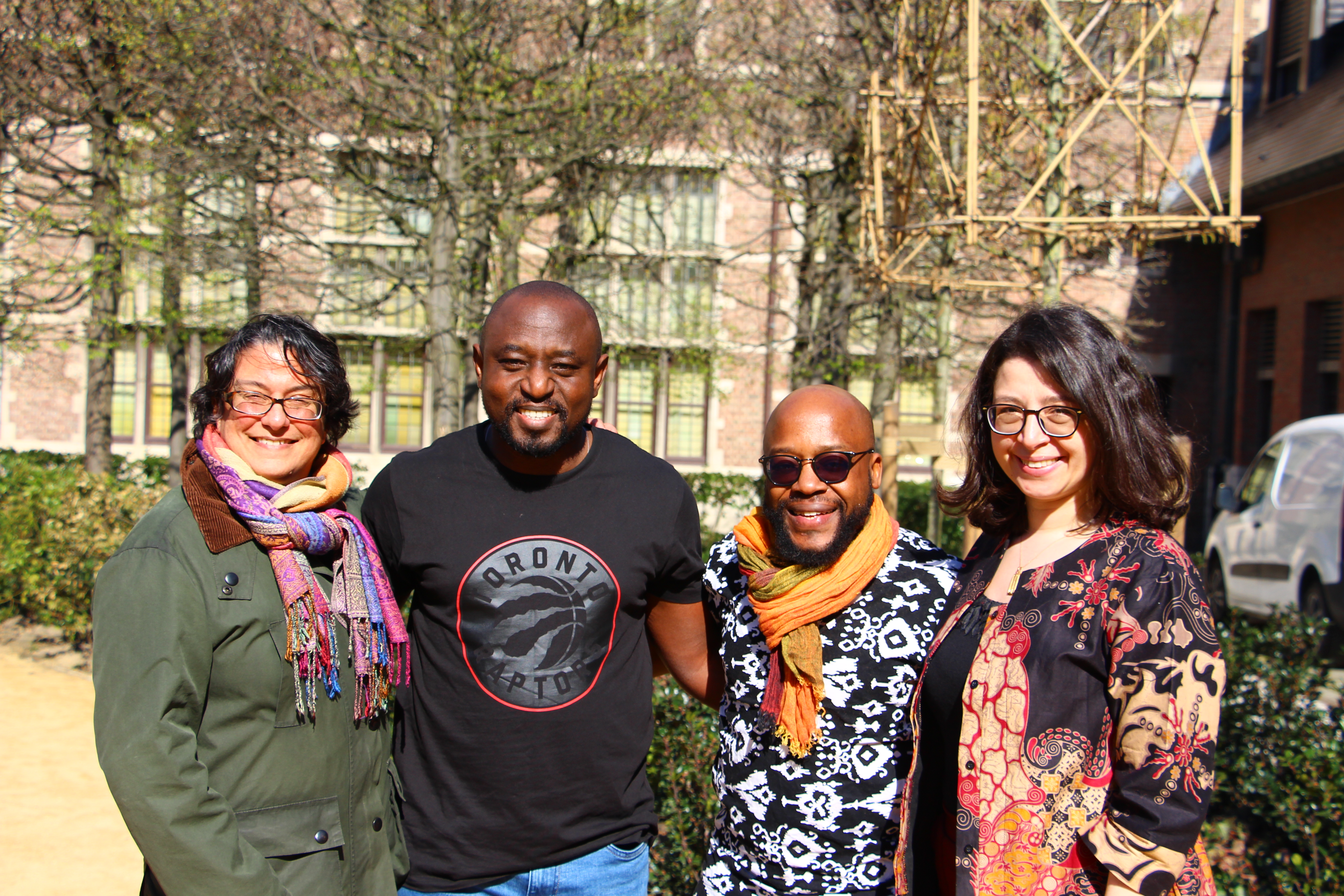
The workshop opened on 16 March 2026 with a welcome by the organisers and the spokesperson of the Law and Development Research Group, Prof. Thalia Kruger.
It was followed by a keynote address by Prof. Olabisi Akinkugbe (Dalhousie University), which set the stage for critical African legal and development studies and situated the workshop within broader epistemological and historical continuities. Subsequently, Workshop I, facilitated by Dr Lamine Doumbia, provided participants with an opportunity to exchange experiences on the particularities of conducting African legal and development research. The first day concluded with an informal dinner at Fidel Ethiopian Restaurant, Antwerp, which extended the scholarly conversation beyond the formal programme.
The second day, 17 March 2026, opened with a lecture by Prof. Ambreena Manji (Cardiff University) on the role of methods in navigating the tension between relevance and radicalism in socio-legal research. Workshop II featured early-career researchers, each presenting ongoing work through a distinct research method, covering topics including comparative constitutional and genealogical historical analysis, collaborative ethnography, the decolonisation of quantitative measurement, socio-legal approaches to land conflict, environmental law and the right to health, and the use of theatre as a tool for understanding child labour. The afternoon sessions featured Workshop III, led by Dr Sandrine Brachotte (Universiteit Antwerpen and UCLouvain, Saint-Louis), on decolonial approaches to legal pluralism and their consequences for legal research, and Workshop IV, led by Prof. Thoko Kaime (Universität Bayreuth), on legitimacy critique as a method in public international law. The day concluded with a reception dinner at Diwan Beirut Restaurant, Antwerp.
The final day, 18 March 2026, began with a film screening of Beyond Law, presented by Dr Gift Gawanani Mauluka (Universität Bayreuth), which used theatre for development as a research method to illuminate the lived realities of child labour in Malawi and the limits of legal frameworks in addressing it. Workshop V, a floating panel discussion on research agendas in law and sustainable development, facilitated by Prof. Gamze Erdem Türkelli (Universiteit Antwerpen), generated frank and productive dialogue on positionality, research ownership, institutional affiliation, the politics of academic publishing, researcher compensation, and the ethical demands of engaged research. Workshop VI was a co-creative blog session convened by the organisers to collectively document insights from across the workshop, resulting in a blog series as the workshop's tangible output to be published later in 2026 on the Law and Development Conversations Blog and the African Legal Studies Blog. The programme concluded with a synthesis and final takeaways session delivered by Abduletif Kedir (Addis Abeba University, Martin Luther University), drawing together the key themes and methodological commitments that had emerged across three days.
Across the three days, several cross-cutting themes emerged with particular force: the imperative to centre Africa as a source of social knowledge rather than merely a site of doctrinal application; the necessity of interdisciplinary engagement for any genuine critique of law; the obligation to make research outputs accessible to the communities they concern; and the ethical demands of positionality, compensation, and activist research. As a direct outcome, participants reported greater methodological reflexivity, strengthened networks for future collaboration, and a renewed shared commitment to advancing research that is rigorous, relational, and politically honest. The event facilitated the formation of new research partnerships and produced collectively generated documentation of insights, laying the groundwork for more accessible scholarship and ongoing dialogue.
For more information, please contact:
Dr. Isabelle Zundel (Law & Development Research Group, Universiteit Antwerpen)
Email: isabelle.zundel@uantwerpen.be
Merlin Mitschker (Chair of African Legal Studies, Universität Bayreuth)
E-Mail: merlin.mitschker@uni-bayreuth.de
About the Organising Institutions
The Law & Development Research Group at Universiteit Antwerpen conducts interdisciplinary research at the intersection of law, human rights, and sustainable development. The Chair of African Legal Studies at Universität Bayreuth advances critical and decolonial approaches to African law and governance. The workshop was funded by the Global Engagement Fund of the University of Antwerp, provided by VLIRUOS (Sharing Minds, Changing Lives) and the OJO Antwerp doctoral school, supporting early-career researchers with project funding from the Flemish Government (Flanders State of the Art).