
News
Repositioning Environmental Human Rights through Temporality and Relationality
01.01.2026
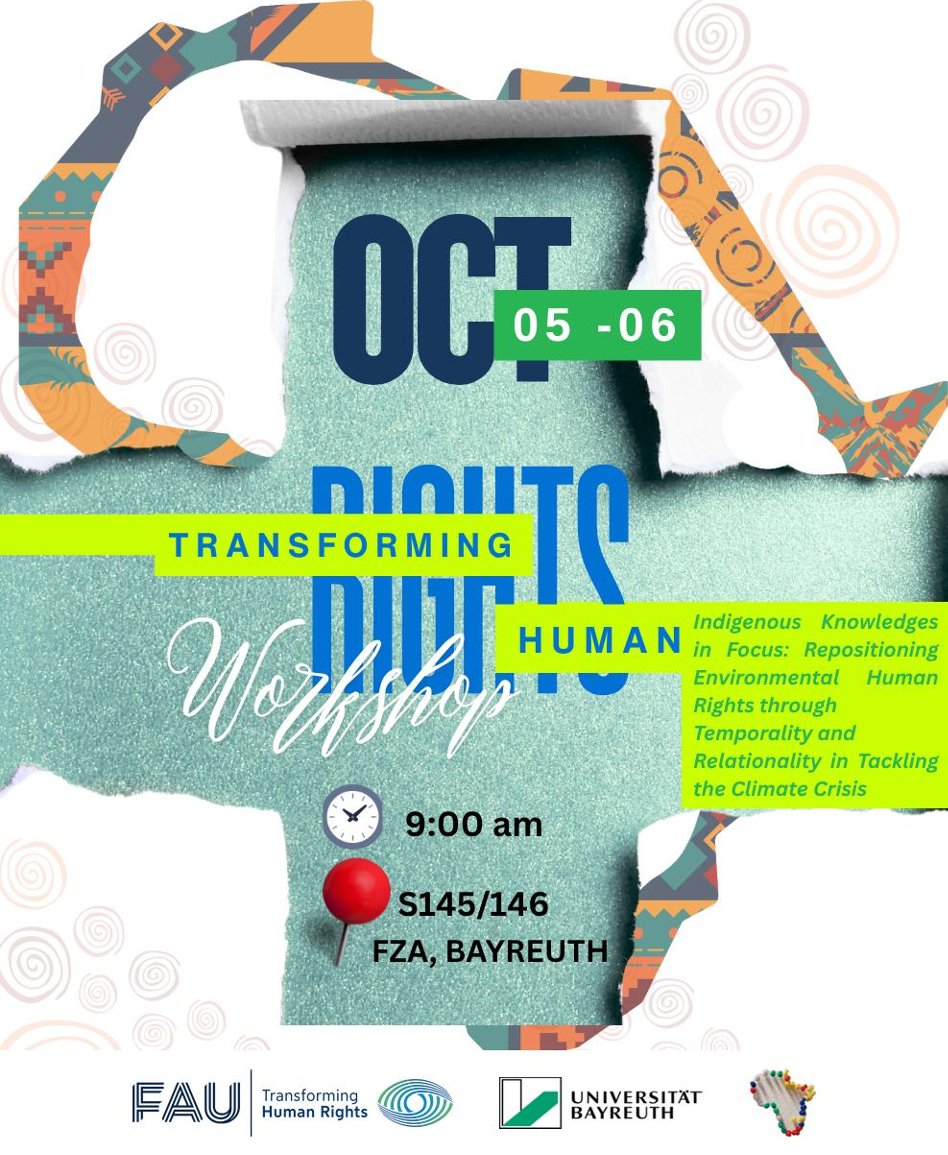
- Environmental human rights are being articulated and contested in the midst of an escalating planetary crisis, yet the frameworks meant to protect them still rest on linear ideas of time, individual rights-holders and nature as an object of regulation. Climate change raises obligations that stretch far beyond electoral cycles and litigation timelines, and ecological degradation exposes how narrow those assumptions have become.
- This two-day workshop, led by Prof. Thoko Kaime (University of Bayreuth) and Prof. Almut Schilling-Vacaflor (FAU Erlangen-Nürnberg), brings together scholars from Africa, Latin America and Europe to rethink environmental rights through two concepts drawn from Indigenous knowledge systems: temporality, which understands time as cyclical and intergenerational, and relationality, which sees rights as relationships among humans, ecosystems, ancestors and future generations. Comparing how the African, Inter-American and European human rights systems have begun to recognise collective and intergenerational claims, participants will co-develop the design of a research project due to start in early 2027.
- The workshop is funded by the Cluster of Excellence "Transforming Human Rights" (DFG, Germany's Excellence Strategy – EXC 3039 – 533607764).